
Planning guide
Basement Plumbing Considerations
Plumbing decides where a basement's wet rooms go. Understand the rough-in, the drain and the sump before you place the bathroom or bar.
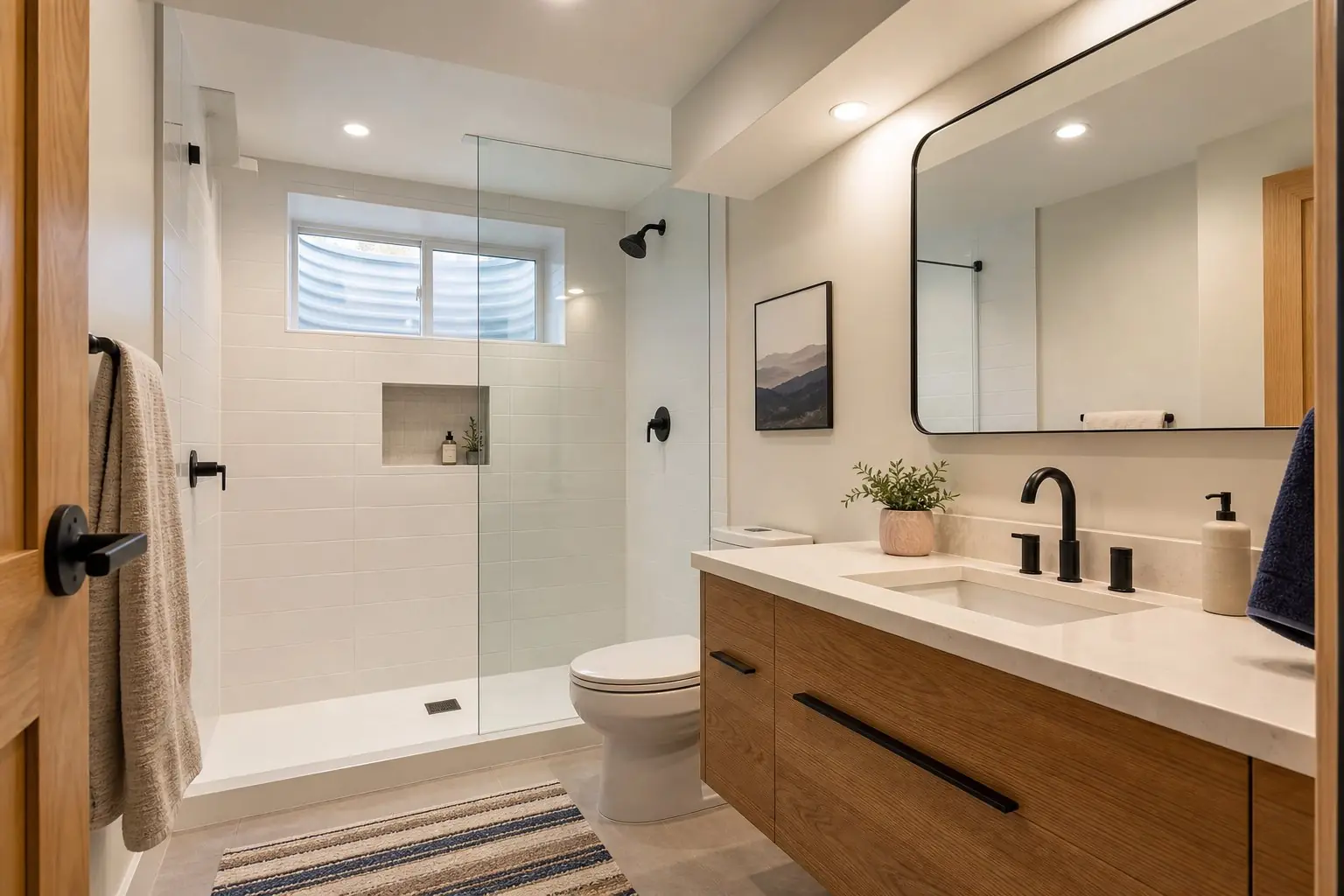
Why plumbing drives the layout
Bedrooms can go almost anywhere egress works, and family rooms almost anywhere at all. Bathrooms, wet bars, kitchenettes and laundry can't, because they have to drain. In a basement the drain is in or below the slab, so where wet rooms go is largely decided by where the plumbing already is.
Start with the rough-in
Many homes have a bathroom rough-in: capped drain and vent pipes in the slab for a future toilet, shower and sink. Look for capped pipes coming up through the concrete, often near the mechanical room or under the main-floor bathrooms. If you have one:
- Building the bathroom there avoids most slab cutting.
- The rough-in's layout sets the fixture positions, so the bathroom shape follows from it.
- A wet bar or kitchenette on the same wall can share the plumbing route.
Drain depth and gravity
Waste lines need a continuous downward slope to the main drain. If the main line leaves the house deep enough, basement fixtures can drain by gravity. If not, fixtures below that level need a pump system, such as a sewage ejector, to lift waste up to the main. That adds equipment, power and maintenance, so it's worth knowing early. Moving fixtures far from the existing drain also means trenching the slab and longer runs.
Venting
Every fixture needs venting so drains flow and traps hold water. A rough-in usually includes vent connections, but new or relocated fixtures may need vent pipes routed up through walls to connect to the home's vent system. That affects which walls can hold plumbing and where soffits go.
Water supply and the water heater
Supply lines are easier to route than drains, and modern flexible piping makes runs through a finished basement simpler, but they still run through walls and ceilings, so plan them with the layout. Adding a bathroom also adds hot-water demand, so it's worth asking whether the existing water heater is sized for the extra use, and keeping service access to it.
Sumps and groundwater
A sump pit collects groundwater from around the foundation, and a pump discharges it outside. Several Davis County cities regulate this directly:
- Syracuse requires sump pumps to discharge to a storm or land drain where available, otherwise at least 2 feet from the basement wall and 5 feet from the property line.
- Clinton notes high water tables citywide, requires subdrains for basements in most cases, and prohibits sump discharge to the sanitary sewer.
- West Point sets land drain zones, with sump requirements in several of them.
In the layout, keep the sump accessible, usually in the mechanical room or a utility closet with a door, never sealed under flooring. See your city page.
Floor drains and laundry
Mechanical rooms often have a floor drain for the water heater and furnace condensate. Keep it accessible and don't cover it with finished flooring, since it's where water goes if the water heater ever leaks. If you're adding laundry, plan its drain and the water supply with the bathroom.
Inspections
Plumbing is inspected before walls close. Layton's and Syracuse's basement inspections, for example, start with a four-way rough that includes plumbing, and Clinton adds an under-floor plumbing inspection where it applies. See the permits guide.
Plan it at the walkthrough
At the free walkthrough, a screened local contractor locates your rough-in, main drain and sump, and the layout sketch places wet rooms where the plumbing works. See basement bathrooms and wet bars and kitchenettes.
Common questions
What is a basement plumbing rough-in?
Drain and vent pipes installed during home construction and capped where a future toilet, shower and sink could go. If a basement has one, building the bathroom there avoids most slab work.
Do basement bathrooms need a pump?
Only if fixtures sit below the level the drain can reach by gravity. In that case a sewage ejector or similar pump system lifts waste to the main line. Whether your basement needs one depends on how deep the main drain runs.
Can a sump pump drain into the sewer?
Generally no. Clinton's code, for example, prohibits sump pumps from discharging to the sanitary sewer, and Syracuse requires discharge to a storm or land drain where available. Check your city's rule.
Put wet rooms where the plumbing works
Free walkthrough that locates your rough-in, drain and sump.