
Planning guide
Radon and Finishing a Utah Basement
You can't see or smell it, and a finished basement is exactly where your family will spend more time. Test before you build.
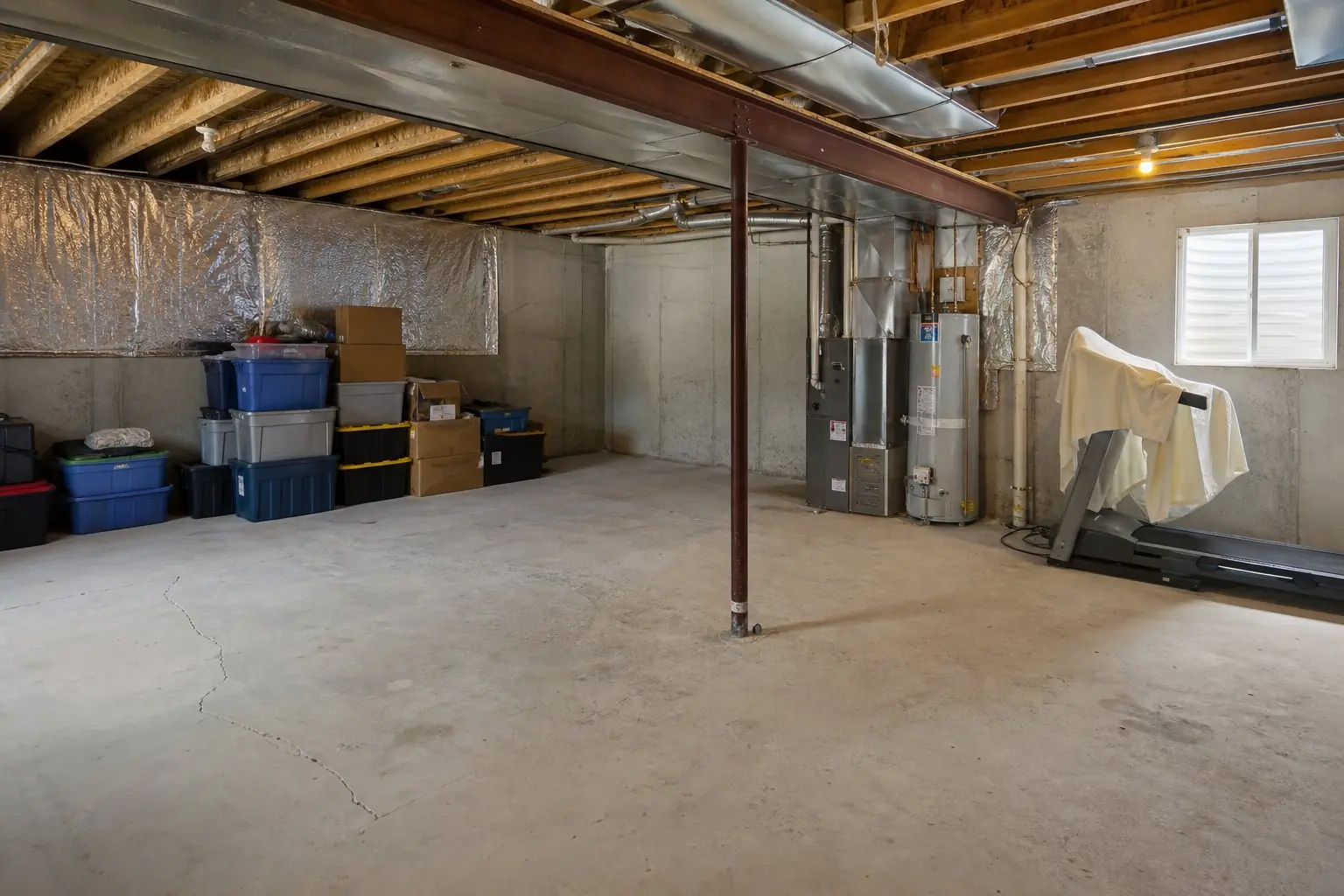
Why radon matters for basements
Radon is a naturally occurring radioactive gas that can seep into homes from the soil, and basements, being in contact with the ground, are often where levels are highest. Finishing a basement changes how much time people spend there: bedrooms, a family room, an office. That's why testing before you finish makes sense.
- Utah homes above the action level
- About one in three, according to Utah DEQ
- EPA action level
- 4 pCi/L
- Average Utah home
- About 5.3 pCi/L, according to Utah DEQ
- Test kit
- About $11, according to Utah DEQ
Radon varies from house to house, even on the same street, so maps and averages only show tendencies. Only a test tells you your number. In Davis County, the health department offers free test kits during the winter months.
When and how to test
- Test before finishing, so mitigation can be planned into the layout.
- Test on the lowest level you'll use. Utah DEQ notes that if you start using a basement, you should retest on that level.
- Follow the kit's instructions on closed-house conditions and placement.
- Retest after finishing and after any mitigation to confirm results.
If the number is high
Utah DEQ advises contacting a certified radon mitigation professional when a home tests above 4 pCi/L. The common approach is sub-slab suction: a hole is bored through the basement slab, and a pipe and fan draw soil gas from under the slab and vent it outside. Costs depend on the house and the system, so get a quote from a certified professional.
Planning mitigation into the layout
A mitigation system is much easier to install neatly before the basement is finished:
- Suction pointOften near the mechanical room or in a storage area where the pipe can rise without crossing finished rooms.
- Pipe routeUp through a closet or chase, or out through a rim joist, planned before walls close.
- Fan powerAn outlet where the fan will be, usually outside or in the attic.
- SealingSealing slab cracks and penetrations before flooring goes down.
Short-term vs long-term tests
Short-term tests give a quick reading over a few days. Long-term tests average levels over a longer period and better reflect seasonal changes. A common approach is to start with a short-term test and follow up if results are near or above the action level. Follow the instructions that come with your test kit and Utah DEQ's guidance.
Talk to your contractor early
If you already know you'll mitigate, tell the contractor at the walkthrough. The suction point, pipe chase and fan power can be shown on the layout, and slab sealing can be scheduled before flooring. Waiting until after the basement is finished usually means a pipe running through a finished room or a less tidy route.
What Utah code says
Radon-resistant construction is voluntary in Utah. The state's code amendments say that when passive radon controls are voluntarily installed, they must comply with IRC Appendix F. Your city won't require a test for a basement finish, but nothing stops you from planning for it.
How it fits the walkthrough
If you've tested, share the result at the free walkthrough. If mitigation is needed, the layout sketch can reserve a route for it, and the scope can note it, even if the system itself is installed by a separate specialist.
Common questions
Should I test for radon before finishing my basement?
It's a good idea. Utah DEQ says one in three Utah homes test above the EPA action level of 4 picocuries per liter. Testing before you finish makes it easier to plan a mitigation system if one is needed.
What radon level is too high?
The EPA action level is 4 pCi/L. Utah DEQ advises contacting a certified radon mitigation professional if your home tests above that.
Is radon mitigation required in Utah?
No. Radon-resistant construction is voluntary statewide, but when passive radon controls are installed they must follow IRC Appendix F.
Does finishing a basement affect radon levels?
It can change how air moves and how much time people spend on that level. That's why Utah DEQ recommends retesting when you start using a basement level, and why testing again after finishing is sensible.
Who installs radon mitigation?
Utah DEQ advises using a certified radon mitigation professional when levels are above the action level. The system is often installed separately from the basement finish, but the route can be planned into the layout.
Can I get a radon test in Davis County?
Utah DEQ notes test kits cost about $11, and the Davis County Health Department offers free radon tests in the winter months. Check the health department for current availability.
Plan around your test result
Free walkthrough, then a layout that leaves room for mitigation if you need it.