
Planning guide
Basement Soundproofing
Sound control is cheap to build in and expensive to add later. Decide which rooms need quiet before the walls and ceiling close.
Which rooms need it
Not every basement room needs serious sound control, so start by deciding where it matters:
- BedroomsEspecially under the kitchen or family room, or next to a theater or mechanical room.
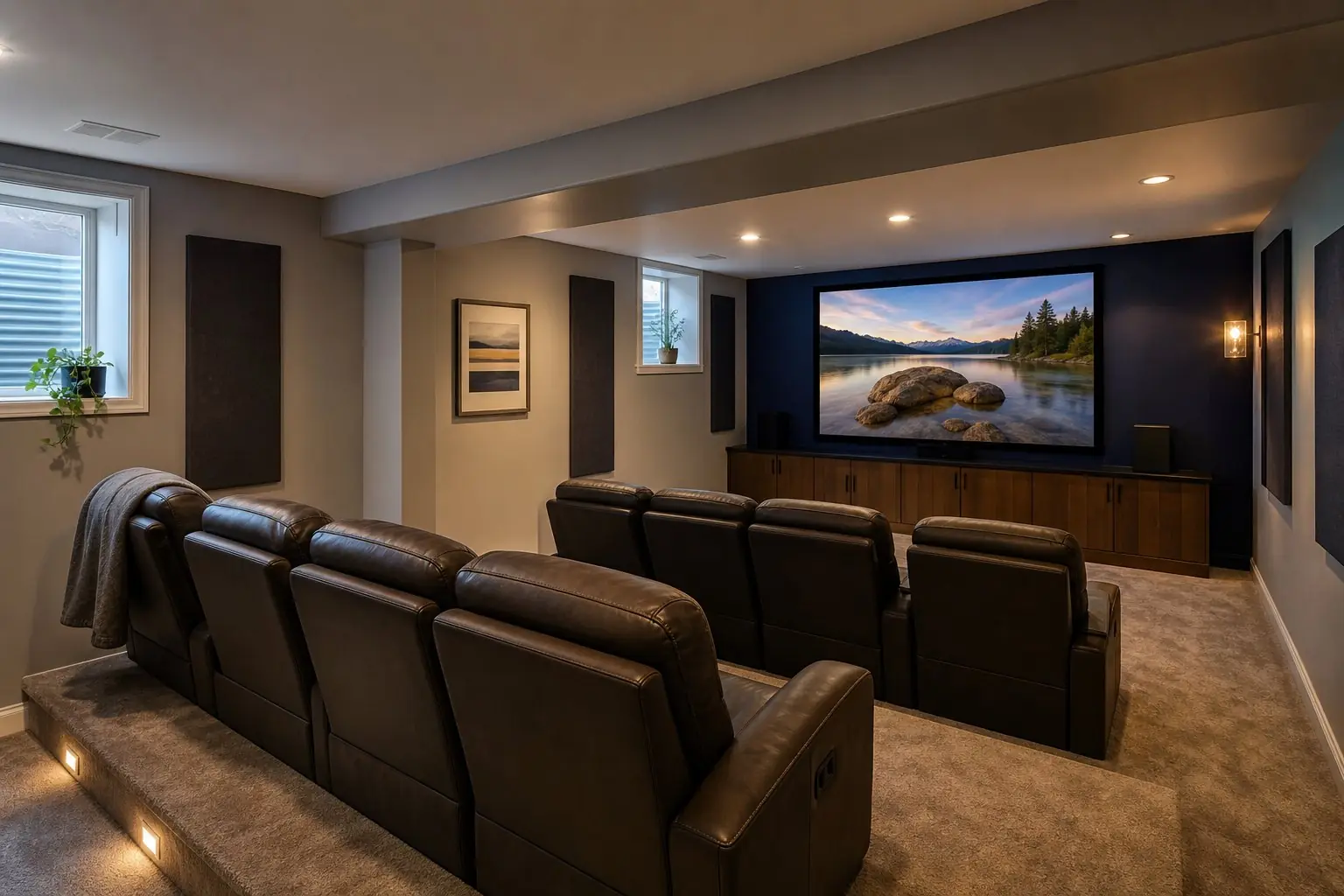
- Theaters and media roomsTo keep movie sound from carrying upstairs and into nearby bedrooms.
- Home officesFor calls during the day while the house is busy.
- Guest suites and basement apartmentsPrivacy in both directions between households.
Two kinds of noise
Airborne sound is voices, TV and music traveling through the air and through walls and ceilings. Impact sound is footsteps, dropped objects and chairs scraping on the floor above, transmitted through the structure. The fixes overlap but aren't identical: insulation and sealing help most with airborne sound, while decoupling and mass matter more for impact noise and bass.
The ceiling
The basement ceiling is the main boundary with the rest of the house. Options, in roughly increasing effect:
- Insulation in the joist bays to absorb airborne sound.
- Sealing around recessed lights, ducts and pipes, since small gaps leak a lot of sound.
- Extra drywall mass, such as a second layer or heavier board.
- Decoupling, mounting drywall on resilient channels or isolation clips so it doesn't touch the joists directly.
Recessed lights are holes in the ceiling. In rooms that need quiet, choose fixtures and housings suited to the assembly, or use fewer and plan light from walls instead.
Walls and doors
- Insulate interior walls between bedrooms, the theater, bathrooms and the mechanical room.
- Use solid-core doors with good seals on bedrooms, offices and theaters. Hollow doors leak sound.
- Avoid back-to-back outlets in shared walls between quiet rooms.
- Seal the bottom plate and penetrations.
Ducts and mechanical noise
The furnace, water heater and water softener make noise, and ducts carry sound from room to room. Layout is the first fix: keep bedrooms away from the mechanical room and avoid sharing a short duct run between a theater and a bedroom. Then insulate the mechanical room walls, use a solid door, and talk with your contractor about duct routing.
Plumbing noise
Drain lines from upstairs bathrooms often run through the basement. In a bedroom or office, wrapping the pipe and boxing it in an insulated soffit keeps flushing noise down. Plan which soffits get this treatment while the layout is drawn.
Flanking paths
Sound finds the easiest route. Even a well-built ceiling leaks noise if a duct, an open stairwell or a gap under a door connects the spaces. Look at the whole path: the door at the top of the stairs, return air openings, shared duct runs and recessed lights. Closing those gaps often matters as much as the wall or ceiling assembly.
Priorities if the budget is tight
- Lay out rooms so bedrooms aren't next to the theater or mechanical room.
- Insulate the ceiling and key walls.
- Seal gaps and penetrations.
- Install solid-core doors on bedrooms, offices and theaters.
- Add decoupling and extra mass where it matters most.
Code items to keep
Sound control doesn't replace code requirements. Fireblocking, foam thermal barriers and smoke alarms still apply, and the ceiling still needs to meet height rules. Heavier assemblies add thickness, so check ceiling heights under ducts and beams. See the Utah basement code checklist.
Put it in the scope
If sound matters, say so at the walkthrough and make sure the written scope lists which rooms get which treatment. "Insulate walls" and "sound-control ceiling with isolation clips in the theater" are very different line items. See theaters and media rooms and basement apartments.
Common questions
What's the most important part of soundproofing a basement?
Usually the ceiling, since that's what separates the basement from the main floor. Insulation in the joist bays, decoupling the drywall from the joists, extra mass and sealed penetrations all help. It has to be done before the ceiling is closed.
Does insulation alone soundproof a basement?
It helps, especially with airborne sound, but on its own it won't stop much footfall noise or bass. Mass, decoupling and sealing air gaps matter as much as insulation.
How do I keep furnace noise out of a basement bedroom?
Keep bedrooms away from the mechanical room in the layout, insulate the mechanical room walls, use a solid door, and route ducts so they don't carry noise straight into sleeping rooms.
Is soundproofing a basement expensive?
Basic measures like insulation, sealing and solid doors add modest cost when built in. Higher-performance ceilings with isolation clips and extra drywall cost more. Doing it during construction is far cheaper than retrofitting.
Can I soundproof just one room?
Yes. Many families focus sound control on a theater, a bedroom under the kitchen, or a guest suite, and leave other rooms standard.
Decide where you need quiet
Free walkthrough, then a written scope that spells out sound control room by room.