
Planning guide
Basement Flooring Options
Concrete is a different starting point than a wood subfloor. Choose flooring for each room with moisture, warmth and use in mind.
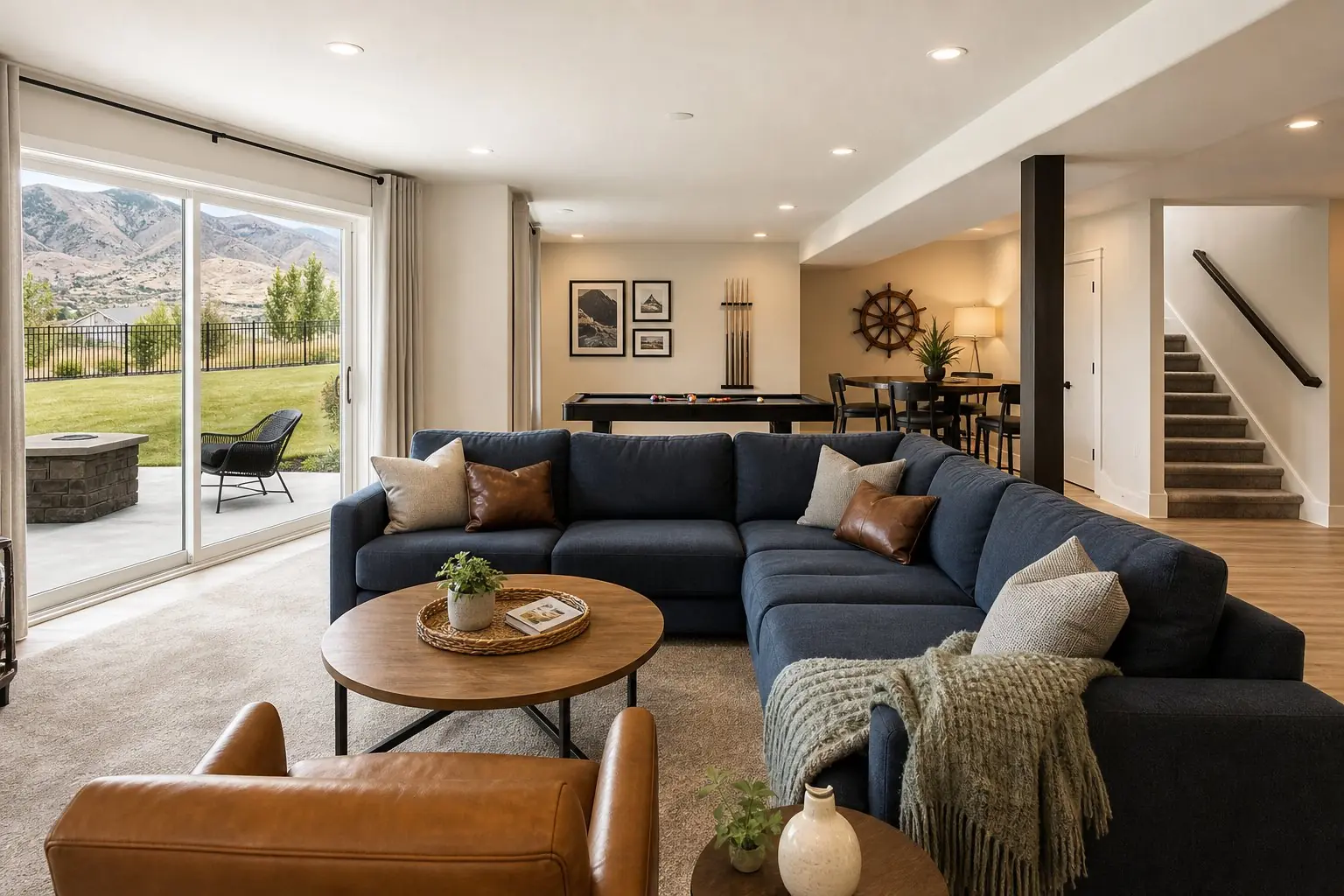
Start with the slab
Basement floors sit on concrete in contact with the ground, so they're cooler and can carry moisture up from below. Before choosing flooring, check the slab: look for damp spots, efflorescence (white mineral deposits), cracks and any history of water. Many flooring products' installation instructions call for a moisture check before installation, so ask your contractor how it'll be done.
If the basement has a sump pit or a history of water, solve that first and keep an access plan for the sump. No flooring makes a wet slab dry.
The common options
| Flooring | Strengths | Watch for |
|---|---|---|
| Luxury vinyl plank (LVP) | Handles occasional moisture, durable, looks like wood, works over concrete with the right underlayment | Quality varies widely; can feel cool underfoot |
| Carpet | Warm, soft, quieter, good for bedrooms and media rooms | Doesn't tolerate water well; choose pad and backing suited to basements |
| Porcelain or ceramic tile | Waterproof, ideal for bathrooms, bars and entries | Cold without radiant heat; hard underfoot for living areas |
| Engineered wood | Real wood look, more stable than solid wood | Must be rated for below-grade use; moisture-sensitive |
| Polished or sealed concrete | Durable, simple, suits gyms and workshops | Hard and cool; shows slab cracks |
Room by room
- Family room and hallsLVP is the common choice, with area rugs for warmth.
- BedroomsCarpet for warmth and quiet, or LVP with rugs.
- BathroomsTile or a waterproof vinyl.
- Wet bar or kitchenetteLVP or tile, which handle spills.
- TheaterCarpet helps absorb sound.
- Home gymRubber gym flooring over the slab or LVP.
Underlayment and subfloor systems
Underlayments and raised subfloor panels add a layer between concrete and flooring that can improve comfort and help with minor slab moisture. They also add height, which matters where ceilings are already near the minimum and at the bottom stair, where riser heights need to stay consistent. Discuss this with your contractor during layout.
Transitions and stairs
Plan how flooring meets at doorways, and how it handles the bottom of the stairs. Mixing too many flooring types in a small basement can make it feel chopped up. One continuous hard floor through shared spaces, with carpet in bedrooms, is a common clean approach.
Warmth underfoot
Concrete stays cool, so basement floors can feel colder than the main level. Carpet with a good pad, rugs over hard flooring, underlayments with some insulating value, and well-planned heating and air supply all help. Electric radiant heat under tile is an option for a bathroom, and it needs a dedicated circuit planned at rough-in.
Durability by household
Think about how the basement will be used. Kids, pets, a home gym and a wet bar all argue for durable, easy-to-clean surfaces. A quiet guest suite or a theater can favor comfort. Matching flooring to use, rather than choosing one floor for everything, usually gives the best mix of cost and comfort.
Budget
Flooring is one of the easier places to scale a basement budget up or down, and it doesn't affect rough-in, so final selections can come later than plumbing and electrical decisions. Include an allowance in the estimate until you choose. See the cost guide.
Common questions
What is the best flooring for a basement?
Many families choose luxury vinyl plank for most basement rooms because it handles occasional moisture and works over concrete, with carpet in bedrooms or media rooms for warmth and sound. The right choice depends on the room and the slab's moisture.
Can I put hardwood in a basement?
Solid hardwood generally isn't recommended below grade because it reacts to moisture. Engineered wood is more stable, and manufacturers specify where it can be installed. Follow the product's installation requirements.
Do I need to test the concrete before installing flooring?
Yes, checking slab moisture is a common step, and many flooring products' installation instructions call for it. A slab with moisture issues needs to be addressed before any flooring goes down.
Is luxury vinyl plank waterproof?
Many LVP products are marketed as water-resistant or waterproof at the surface, but water can still get under the floor at edges and seams, and the slab beneath still needs to be dry. Check the product's rating and installation requirements.
Should basement bedrooms have carpet?
Carpet is a popular choice for bedrooms because it's warm and quiet. If the basement has any history of moisture, a hard floor with area rugs is the safer choice.
Should flooring go down before or after the walls are finished?
Usually after drywall and paint, so the new floor isn't damaged by construction. Some systems, like subfloor panels, go down earlier. Your contractor's sequence in the written scope will show when flooring is installed and what protects it afterward.
Choose floors that suit each room
Free walkthrough, then a written scope with flooring allowances you can adjust.