
Planning guide
Basement Storage Planning
Before the basement was a family room, it was where everything lived. Plan where it goes, or it ends up in the new rooms.
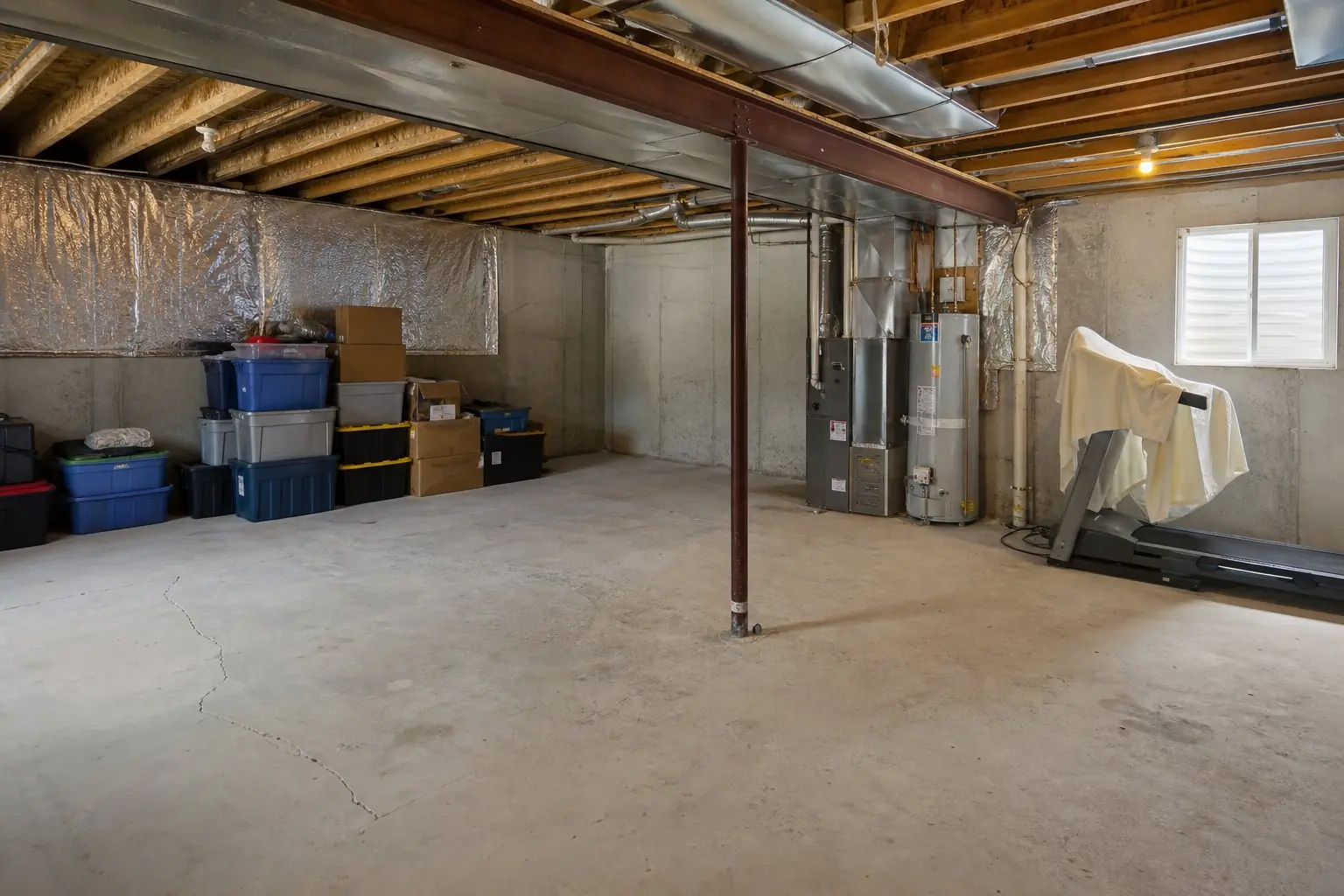
Take inventory first
Look at what's stored in the basement now: holiday decorations, camping gear, kids' clothes in the next size up, bulk groceries, tools, sports equipment, keepsakes. Some of it will go elsewhere, but a lot of it won't. Estimate how much shelving or floor space the rest needs before the layout is drawn. It's easier to give storage a room than to find space for it after finishing.
The best places for storage
- Under the stairsAwkward headroom, perfect for shelves or a closet with a door.
- Beside the mechanical roomAn unfinished or lightly finished room that keeps equipment accessible.
- Under low soffitsSpaces with too little height for a room work for cabinets and shelving.
- Darker interior cornersAreas without windows that aren't needed for a theater or bathroom.
Finished, unfinished, or in between
- Unfinished storage room: concrete floor, open ceiling, shelving. Cheapest, keeps pipes and valves accessible.
- Lightly finished: painted walls, simple lighting, sealed floor. Cleaner, still practical.
- Built-in storage: closets, cabinets around a TV wall, window seats, cabinets under a bar. Integrated into finished rooms.
Leaving storage unfinished can lower the budget and makes access to the water main, panel and furnace easier. See the cost guide.
Keep equipment accessible
Whatever you store, keep clear access to the furnace, water heater, water softener, electrical panel, water main and any sump pump. Appliances need service clearance, and fuel-fired equipment needs clearance from combustibles. The electrical code doesn't allow panels in clothes closets or bathrooms, so storage rooms and closets shouldn't swallow the panel.
Storage inside finished rooms
- Bedroom closets sized for real use. A teenager's room needs more than a token closet.
- Built-ins around the media wall for games, consoles and books.
- A coat closet or bench near a walkout or side entrance.
- Cabinets in a bar or kitchenette that hold entertaining supplies.
- A closet in a guest or in-law suite.
Shelving and organization
Good storage is about layout as much as square footage. Sturdy shelving along walls, clear aisles, labeled bins and a spot for large items such as luggage or a cooler make a modest room hold a lot. Lighting matters too: one bulb in the middle of a storage room leaves shelves in shadow. Plan a couple of fixtures or a light per aisle.
Special storage needs
- Food storage: many Utah families keep food storage in the basement. Plan shelving sized for cans and buckets, in a cool spot away from the furnace.
- Sports and outdoor gear: near a walkout door or side entrance if there is one.
- Tools: a workbench in or next to the storage room, with outlets.
- Documents and keepsakes: on high shelves, in sealed bins, away from exterior walls.
Moisture and storage
Keep stored items off the slab on shelving, especially near exterior walls and any area with a history of moisture. Plastic bins hold up better than cardboard. If the basement has a sump, keep storage clear of it.
Plan it in the layout
Mark storage on the layout sketch the same way you'd mark a bedroom. It belongs in the written scope too: shelving, lighting and any doors. See basement layout planning.
Common questions
Should I leave part of the basement unfinished for storage?
Often, yes. An unfinished or lightly finished storage room beside the mechanical room keeps equipment accessible, holds bulky items and lowers the budget compared to finishing every square foot.
Where is the best place for basement storage?
Under the stairs, next to the mechanical room, and in areas with low soffits or limited light. These spaces are less useful as rooms but work well for storage.
Can storage go in the mechanical room?
Some, but equipment needs clearance and service access, and fuel-fired appliances need clearance from combustibles. Keep storage organized and away from the furnace and water heater.
How much storage should a finished basement keep?
Base it on what you actually store now, minus what you'll move elsewhere. Families with seasonal gear, camping equipment or bulk storage usually need a dedicated room, not just closets.
Can storage go under a basement stair?
Yes, it's one of the best spots. Make sure the space is finished as the code requires for enclosed areas under stairs, and plan a light.
Does a storage room need to be heated?
A storage room that's part of the conditioned basement stays at roughly the same temperature as the rest of it. Keep items that are sensitive to temperature or humidity away from exterior walls and the furnace, and discuss the room's air supply with your contractor when the layout is drawn.
Give storage its own place in the plan
Free walkthrough, then a layout sketch with storage planned in.